

The History and Meaning of Signet Rings: From Ancient Seals to Modern Style
Often called signature rings for the personal stamp they once pressed into hot wax, signet rings are one of the oldest forms of jewellery still worn today. They predate the engagement ring by thousands of years. They have sealed royal decrees, authenticated trade agreements, and passed through families across generations. Just the thought of all that history gives us chills.
And yet they have never felt more current. The modern signet ring has evolved well beyond its heraldic origins. It is now a piece that speaks to individuality, craftsmanship, and the kind of personal storytelling that mass-produced jewellery cannot replicate. You’d be hard pressed to find a millennial or Gen Z pinky finger in Melbourne without a signet ring wrapped around it.
This is the story of the signet ring: where it began, what it means, and why it still matters.
What is a Signet Ring?
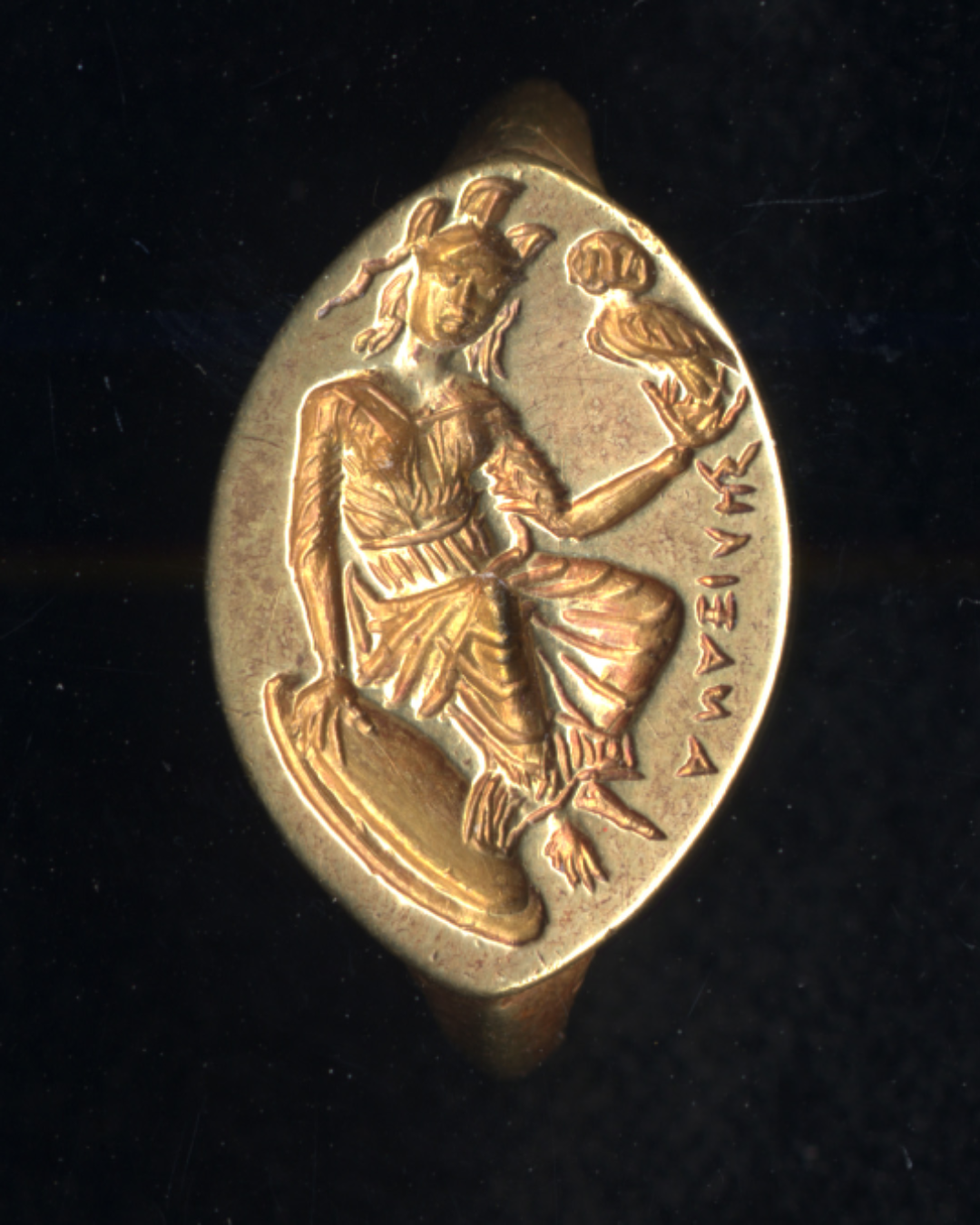
A signet ring is a ring bearing an engraved emblem, monogram, crest, or symbol on its flat face. The word "signet" comes from the Latin signum, meaning sign or seal. Historically, the engraved face was pressed into soft wax or clay to authenticate documents, mark property, or seal letters. The design was carved in reverse (intaglio) so the impression it left read correctly.
The flat face, typically oval or cushion-shaped, is what distinguishes a signet ring from other ring styles. It was designed for function first. That it became beautiful was a consequence of the skill and intention behind its making.
A Brief History of Signet Rings
Ancient Origins
The earliest known signet rings date to ancient Mesopotamia, around 3500 BCE, where cylinder seals were rolled across clay tablets to mark ownership and authenticate trade. By 1800 BCE, the Egyptians had adapted the concept into wearable rings, often carved from stone or cast in gold. Pharaohs wore signet rings as instruments of power. Tutankhamun was buried with several (we die).


Greece, Rome, and the Classical World
Greek artisans elevated the signet ring into a form of miniature art, carving portraits and mythological scenes into gemstones like agate and carnelian. The Romans adopted and expanded the tradition. In Rome, signet rings became markers of social rank. Only citizens of a certain standing were permitted to wear gold signets. The ring was both identification and authority: a Roman officer could seal military orders with his ring, and the recipient would know exactly who had sent them.


Medieval Heraldry and Family Crests
During the medieval period, the signet ring became inseparable from heraldry. Noble families engraved their coats of arms onto gold rings, using them to seal correspondence and legal documents. The ring functioned as a personal signature in an era when literacy was not universal. In some traditions, a signet ring was destroyed upon its owner’s death to prevent forgery.

The Modern Revival
By the 18th and 19th centuries, signet rings had shifted from practical tools to symbols of heritage and taste. The British aristocracy wore them as a matter of course, often passed from parent to child. In Australia, the tradition arrived with colonial settlement and has persisted quietly ever since, particularly in families with British or European roots.
Today, the signet ring is experiencing a genuine resurgence, particularly within Melbourne’s creative and fashion communities. The modern signet has been reclaimed as something far more personal and expressive. Now, signet rings are worn by artists, musicians, designers, and lovers of jewellery alike; engraved with initials, star signs, hidden symbols, meaningful coordinates, or left completely unadorned as bold, sculptural forms. In Melbourne especially, the pinky ring has become almost a rite of passage: less about lineage, and more about identity, creativity, and the stories we choose to carry with us.
What Does a Signet Ring Symbolise?
The meaning of a signet ring depends on who is wearing it and why. Historically, it symbolised authority, lineage, and belonging. A family crest engraved on gold was a declaration of heritage and social standing.
In a modern context, signet rings symbolise identity, continuity, and intention. They mark milestones: a 21st birthday, a graduation, a marriage, a personal turning point. They carry family stories forward. And for many people, they are simply a piece of jewellery that feels more considered and deliberate than anything pulled from a display case.
The Black Finch Perspective on Signet Rings
At Black Finch, signet rings have never felt purely traditional. To us, they are one of the most expressive forms of fine jewellery; a wearable canvas designed to hold narrative, symbolism, texture, and sentiment.
While we deeply respect the heritage, we are equally drawn to the freedom a signet ring offers today. A signet becomes a surface for storytelling. A place to experiment with form, gemstones, engraving, and texture in a way few other jewellery pieces allow.
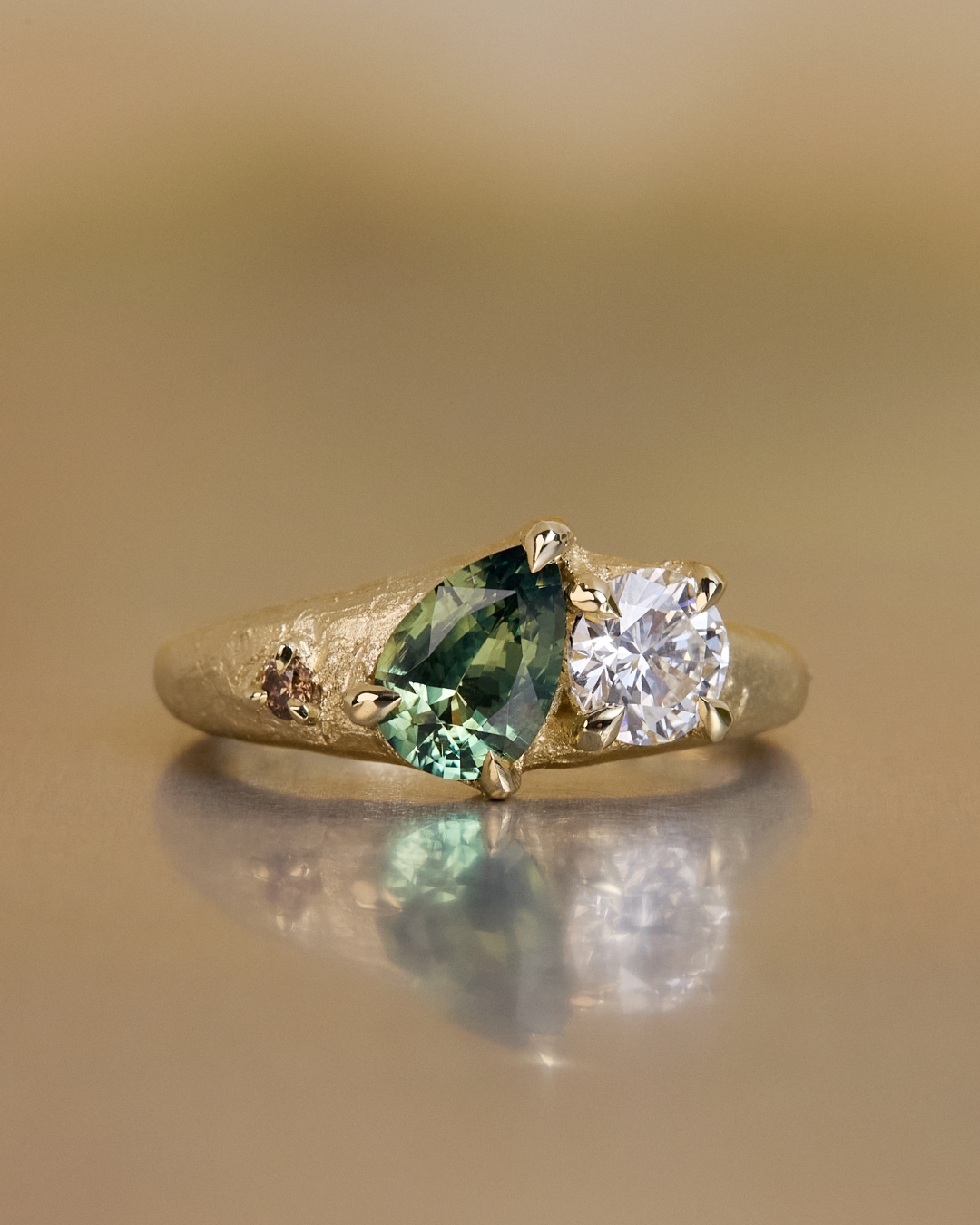
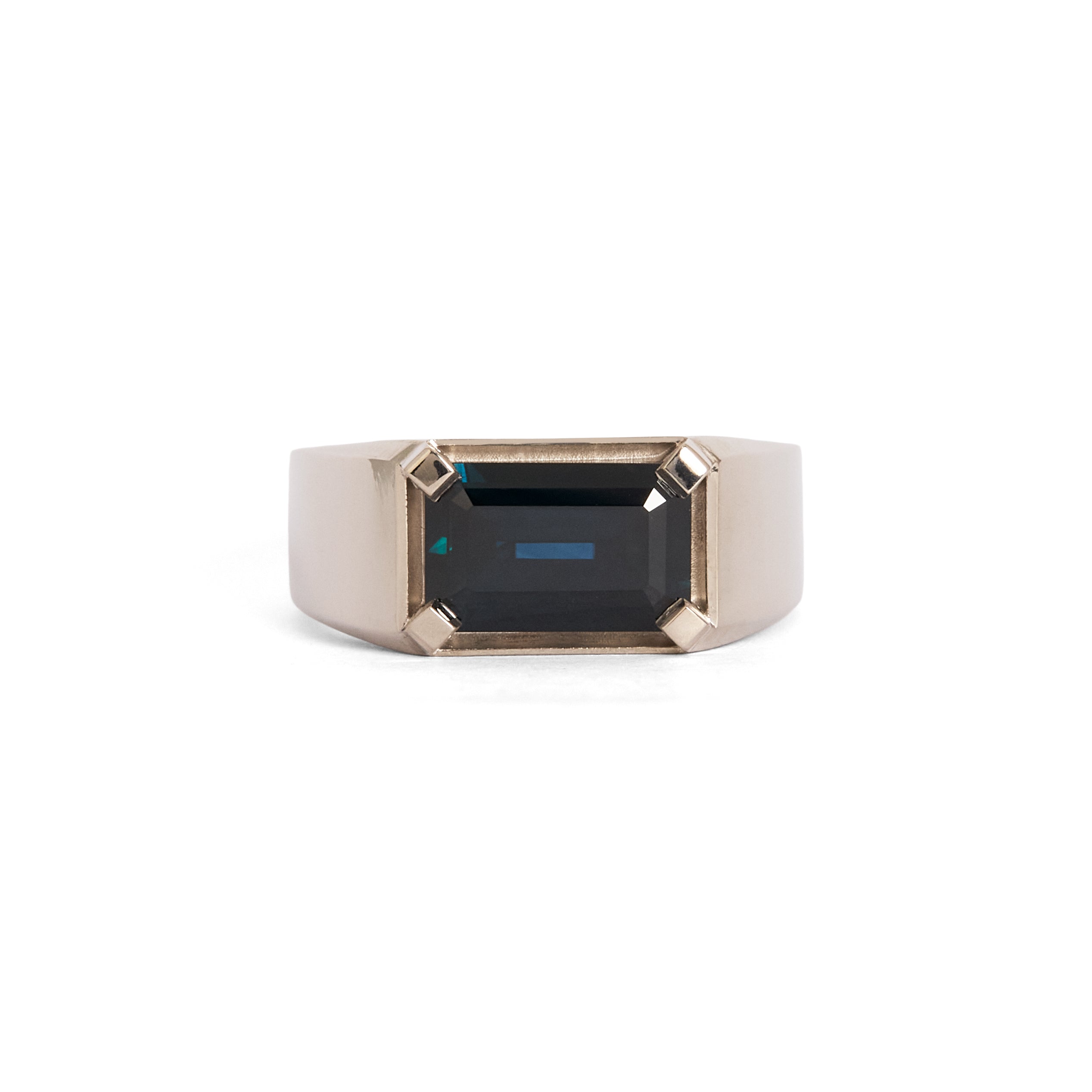
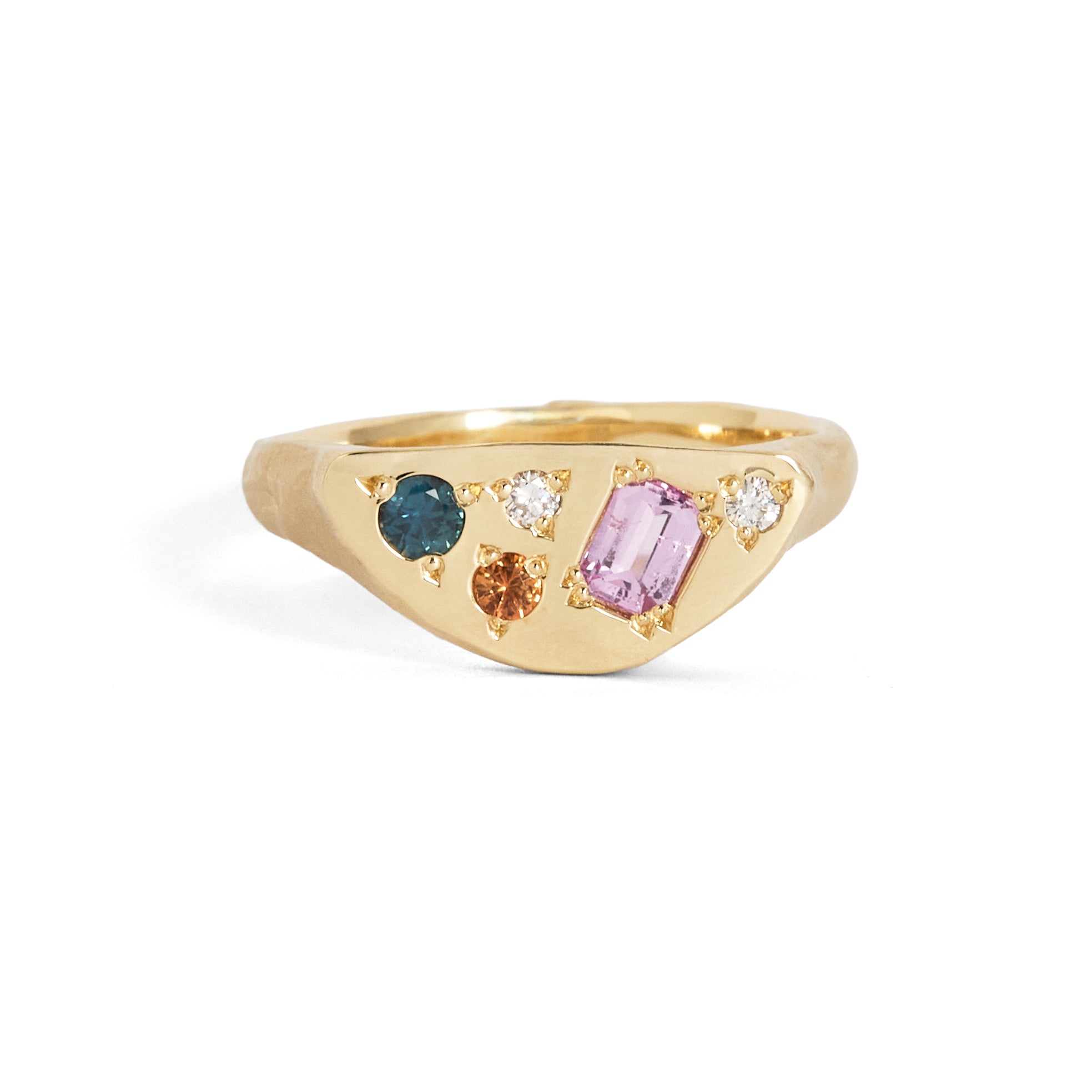
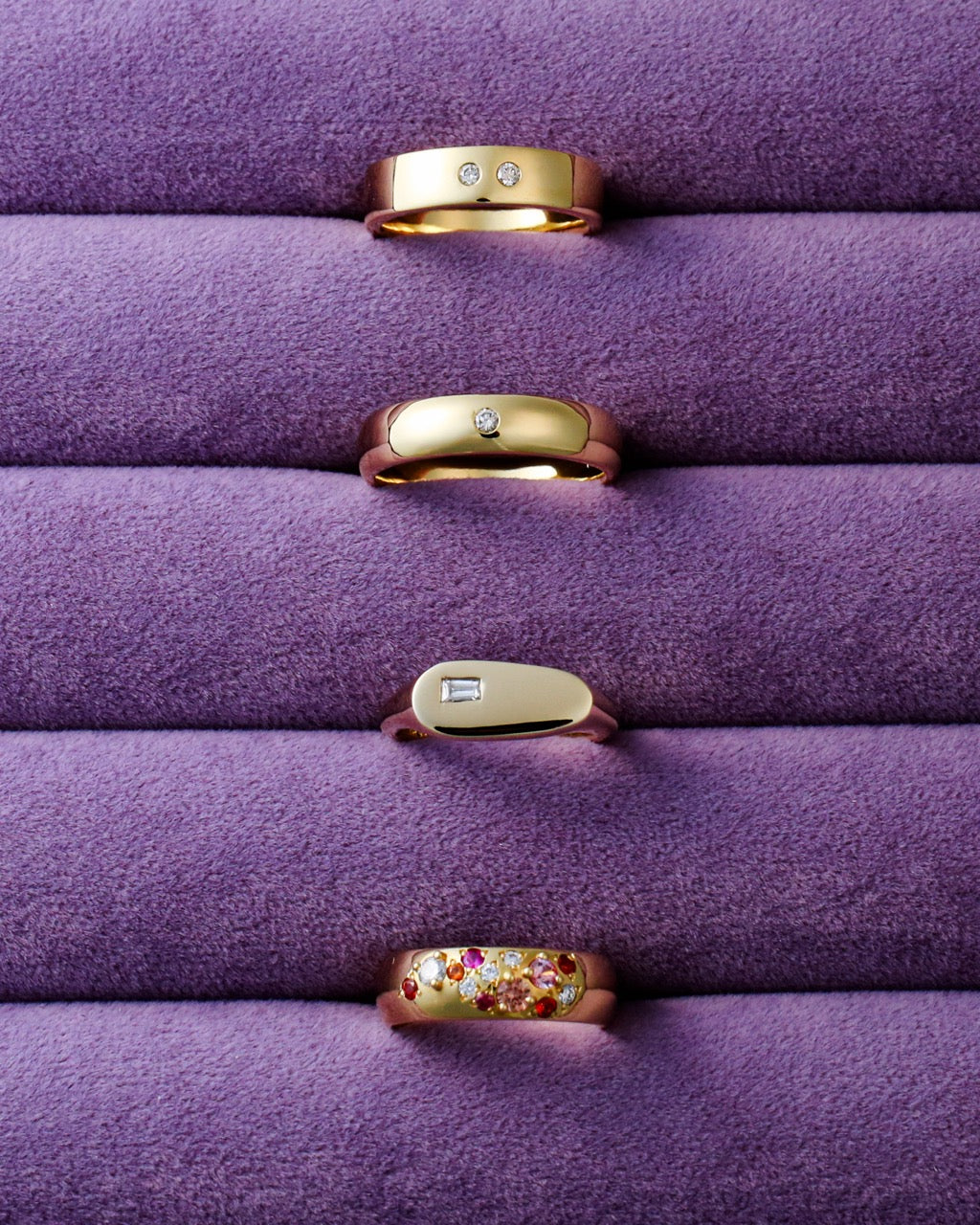
Over the years, we have crafted custom signet rings with waxy, organic finishes reminiscent of ancient artefacts, sculptural geometric forms with high-polished mirror surfaces, and richly textured pieces inspired by the unpredictable beauty of cuttlefish casting. Some clients choose to engrave initials or family markings, while others incorporate diamonds, sapphires, hidden symbols, or meaningful motifs that only they understand.
Perhaps this is why signet rings remain one of our favourite pieces to create. There is a generosity to them; a sheer volume of precious metal and surface area that invites creativity. Whether minimal or heavily detailed, every signet ring becomes deeply personal, shaped not only by the wearer’s style, but by their history, relationships, and rituals.
Can Women Wear Signet Rings?
Yes, women can absolutely wear signet rings. While signet rings were historically associated with men, women have been wearing them for longer than most people realise. Women of noble birth wore signet rings throughout the medieval period, particularly when they held property or managed estates in their own right.
The modern shift began in earnest during the 1970s and 1980s. Princess Diana famously wore a gold signet ring on her left pinky finger, a choice that helped normalise the style for women outside aristocratic circles. Today, signet rings are one of the most popular fine jewellery choices for women seeking something with presence and weight that sits outside the engagement ring and wedding band tradition. We say ‘stack them up,’ loud and proud. The more the merrier!
At Black Finch, we design signet rings for everyone. Our collection includes pieces sized and proportioned for smaller hands without compromising the bold, sculptural quality that makes a signet ring what it is.
Which Finger Do You Wear a Signet Ring On?
Traditionally, signet rings are worn on the little finger (pinky) of the non-dominant hand. In British convention, that means the left pinky. The reasoning was practical: the pinky kept the ring out of the way during daily tasks while still being accessible for sealing.
Today, there are no hard rules. Signet rings are worn on the ring finger, index finger, and even the thumb. Some people wear them alongside a wedding band. Others stack them with other rings entirely. The only real guideline is that the ring should feel comfortable and sit well on whichever finger you choose.
If you are wearing a signet ring with an engraved crest, tradition holds that the design should face inward (toward the wearer) when worn socially, and outward when used as a seal. Most contemporary wearers do not observe this distinction.
Beyond the Crest: Modern Signet Ring Engraving
Family crests remain a meaningful choice for signet ring engraving, but they are no longer the default. Modern engraving has opened up significantly, and the options are as personal as the person commissioning the ring.
Common signet ring engraving choices include:
- Initials or monograms
- Meaningful coordinates (a birthplace, a proposal location, a favourite place)
- Symbols with personal significance (an anchor, a wave, a compass rose)
- Fingerprint engravings
- Custom glyphs, illustrations or line art
- A clean, unengraved face (the shape and weight of the ring speak for themselves)
At Black Finch, engraving is part of the design conversation from the start. Whether you want a hand-engraved family crest or a fine-line symbol that only you understand, the process is collaborative and precise.
Signet Rings as Wedding and Commitment Rings
One of the more interesting shifts in recent years is the growing use of signet rings as wedding bands and commitment rings. The connection is not new. In medieval Europe, signet rings were sometimes exchanged as betrothal rings, the seal representing a binding promise.
Today, couples are choosing signet-style wedding rings for the same reasons people have always been drawn to them: they carry weight, presence, and a sense of permanence that thinner bands do not always achieve. A pair of matching signet wedding bands, each engraved with a shared symbol or complementary designs, makes for a deeply personal alternative to a traditional band.
Explore Black Finch signet wedding rings
Choosing a Signet Ring That Lasts
A signet ring is a long-term piece. It should feel substantial on the hand and age well over decades of daily wear. A few things to consider when choosing yours:
- Metal. Gold is the traditional choice and remains the most popular. 18 karat gold offers the best balance of durability and richness. 9 karat is harder but lighter in colour. Yellow, white, and rose gold all work beautifully in signet form.
- Weight. A well-made signet ring has a solid, weighty feel in the hand. Hollow or overly thin rings will deform over time. Look for a piece with substance.
- Face shape. Oval and cushion shapes are classic. Round faces are less traditional but work well for contemporary designs. We don’t discriminate; square, oval, half-moon, a little wonky, we love them all. We simply believe the face should be proportionate to your hand.
- Engraving quality. Hand engraving produces the finest, most detailed results. However, laser engraving is precise for more detailed artwork, but can lack the depth and character of hand work.
Explore the Black Finch signet ring collection
Your Signet Ring. Your Story.
A signet ring is one of the few pieces of jewellery that truly becomes yours. Not just another accessory thrown on in the morning, but a tiny sculpture carrying story, sentiment, symbolism, and self-expression all at once. A little gold relic of who you are, what you love, where you’ve been, or who you’re becoming.
Maybe it holds an engraved symbol only you understand. Maybe it’s set with a unicorn sapphire that changes colour in the light. Maybe it’s smooth, weighty, and completely blank; letting the shape and presence speak for itself.
At Black Finch, we love signet rings because they invite play. Texture. Experimentation. Meaning-making. They feel ancient and contemporary all at once. Future heirlooms with a bit of attitude. We handcraft every signet ring in our Melbourne jewellery shop using 100 percent recycled gold. Whether you are drawn to our existing collection or want to design something entirely your own, we would love to hear what your ring should say.
And honestly? Melbourne’s pinky fingers seem to agree.